Serving Bridgewater, MA and surrounding areas. (774) 380-3018
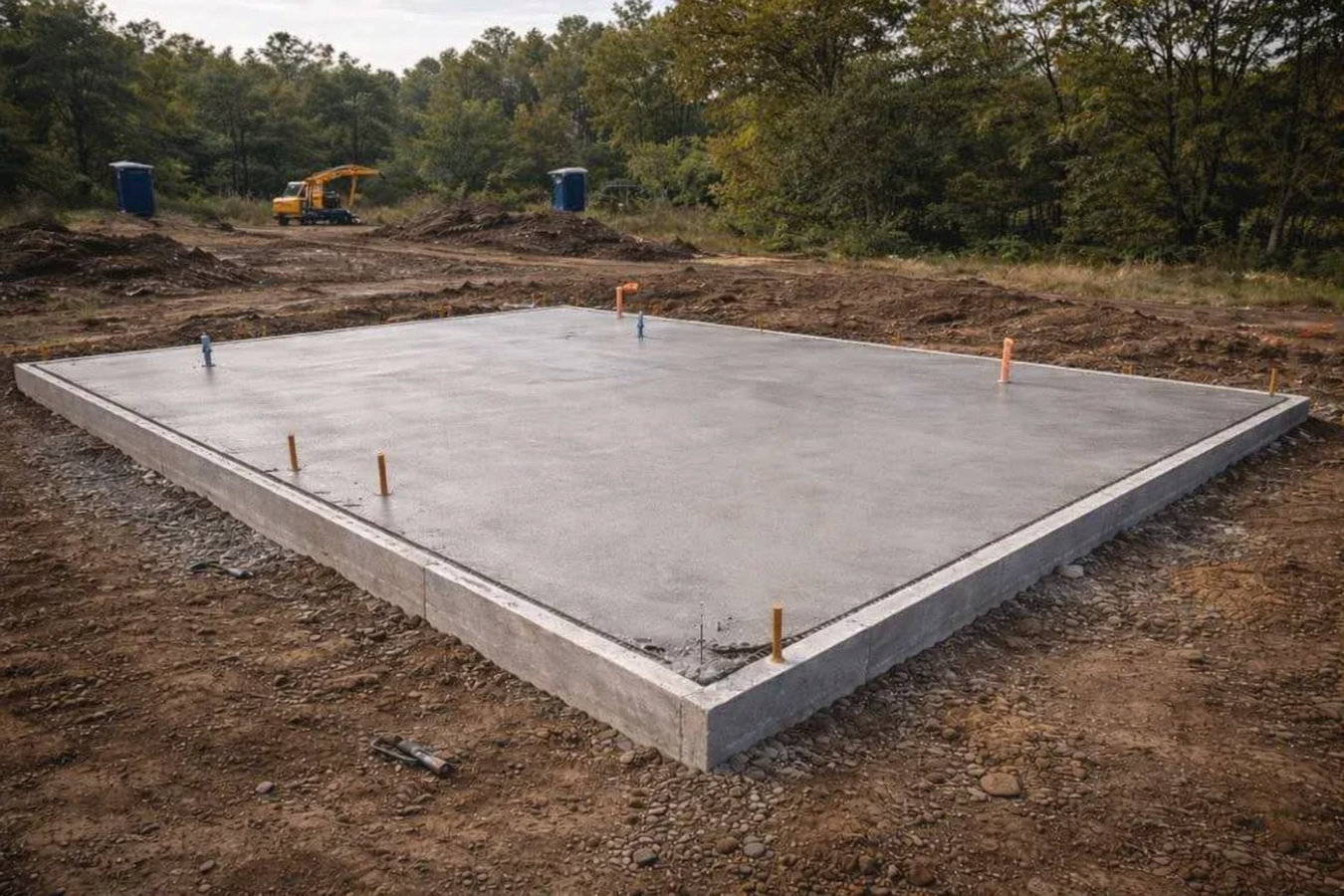
Planning a garage, addition, or new structure? A properly built slab is the first step - and the one that sets up everything above it to last.
Slab foundation building in Bridgewater means pouring a reinforced concrete base directly on prepared ground, with permits, grading, and a properly compacted subgrade - most residential projects take one to two weeks from first call to a slab you can build on.
Whether you are putting up a detached garage, adding a sunroom, or starting a workshop, the slab is what everything else depends on. Bridgewater's glacially deposited soils and cold winters mean this work needs to be done carefully - not just quickly. If you are also planning walls or steps around the new structure, our foundation installation service covers the full below-grade scope.
Most homeowners in Bridgewater who call us have either outgrown their garage, are adding living space, or are replacing a slab that was done poorly the first time. All three situations start the same way: an honest look at your site and a clear, written plan.
If you have a garage, addition, or workshop planned that will sit on bare ground, you need a slab before any framing begins. Without a proper concrete base, the structure has nothing solid to anchor to and will shift and deteriorate. This is the most straightforward sign: new structure planned means a slab comes first.
Small hairline cracks in an old slab are common, but if you can fit a pencil into a crack, or if one section sits noticeably higher or lower than the next, the slab has moved in a way that signals the ground has shifted. In Bridgewater, this is often linked to the region's sandy, glacially deposited soils settling unevenly. A contractor can assess whether repair or replacement makes more sense.
If you see moisture on your concrete floor in spring, or a chalky white residue forming on the surface, water is moving up through the slab from below. In Bridgewater's lower-lying neighborhoods near the Taunton River watershed, a high water table makes this more common than homeowners expect. A new slab with a proper moisture barrier solves this at the source.
If a door that used to swing freely now drags on the floor, or gaps are forming around window frames, the floor beneath may be settling unevenly. This often traces back to a slab poured without adequate soil preparation or one that has been undermined by water over time. Have a contractor inspect the slab before the problem worsens and affects the structure above.
We handle every phase of slab work - site preparation, grading, soil assessment, form-setting, reinforcement, the pour, and finishing. We also manage the permit and inspection with the Bridgewater Building Department so you are not chasing paperwork. If your project requires more than a slab - say, full basement walls - our foundation installation team handles the complete below-grade scope. For smaller supporting structures, our concrete footings service covers the load-bearing base work separately.
Every slab job starts with an on-site assessment - we look at your soil, your drainage, and the structure you are planning before we give you a number. That means no mid-project surprises about site conditions. If you already have concrete nearby that needs to connect to the new slab, we use proper expansion joints to keep both structures independent and stable over time.
Suited for homeowners building a new detached or attached garage who need a strong, level base built to handle vehicle loads and freeze-thaw winters.
Suited for homeowners expanding their living space where the new slab must connect cleanly to the existing foundation without causing settling issues.
Suited for workshops, sheds, and outbuildings that need a permitted, properly prepared base rather than a quick pour on unprepared ground.
Suited for homeowners dealing with a cracked, settled, or moisture-damaged slab where repair is no longer the right solution and a full new pour is needed.
Bridgewater's soils are not uniform - much of town sits on glacially deposited sandy loam and gravel, but lower-lying areas near the Taunton River and its tributaries have ground that holds water long after a storm. A slab poured without addressing that drainage will develop moisture problems within a few seasons. The Town of Bridgewater also requires a permit and a pre-pour inspection for any new foundation, which means your project has to be on schedule with the building department - not just the concrete truck. Homeowners in Raynham, MA and East Bridgewater, MA face the same freeze-thaw and soil conditions, and we work across all of these communities.
Bridgewater's older housing stock also means a lot of our slab work involves additions next to existing foundations - not greenfield new builds. That requires care at the joint between old and new concrete. It also means navigating occupied homes and tighter site access than you get on a new construction lot. This is work we do regularly in Bridgewater, and the experience shows in how the finished slab performs over time.
We schedule a visit to your property rather than quoting blind. Slab pricing depends on what the ground looks like and how much site preparation is needed - a written estimate that breaks down labor, materials, and permit fees is what you get after the visit.
We submit the permit application to the Bridgewater Building Department and schedule the required pre-pour inspection. This typically adds one to two weeks before work starts - plan for it and your timeline will not have surprises. We reply to all inquiries within one business day.
Grading, soil compaction, gravel base, moisture barrier, and steel reinforcement are all in place before the concrete arrives. This preparation phase typically takes two to four days and is where most of the quality difference between contractors actually lives.
The pour typically takes four to eight hours for a residential slab. We apply a curing compound, walk you through the finished slab, and confirm the final inspection with the town before we consider the job done.
No pressure - just a free, written estimate for your Bridgewater slab project. We reply within one business day.
(774) 380-3018We pull every permit and schedule every inspection with the Bridgewater Building Department as part of the job - not as an extra. This means your project is on the record, properly inspected, and legally documented for when you sell or file a claim.
Every slab we pour is reinforced and protected during curing so the first freeze-thaw cycle does not undo the work. We schedule pours within the safe window - late April through October - and monitor the forecast before any concrete is ordered.
We look at your soil before we quote. Bridgewater's glacial soils and high water table in lower-lying areas require different preparation than a stable, well-drained lot - and that difference shows up in the price and in the final result. American Concrete Institute standards guide our subgrade and reinforcement decisions.
Our estimates break down labor, materials, permit fees, and site preparation so you can compare fairly. If something unexpected comes up during excavation, we tell you before we act - not after the invoice arrives.
Slab work is the foundation of everything you build above it - and that is exactly how we treat it. Every step from soil prep to final inspection is done to a standard that will still be holding up twenty years from now.
Full basement and crawl space foundations for new construction and replacement projects in Bridgewater.
Learn MoreLoad-bearing concrete footings for structures that need a solid base without a full slab pour.
Learn MoreBridgewater concrete crews book out fast once the ground thaws - reach out now and lock in your project date.