Serving Bridgewater, MA and surrounding areas. (774) 380-3018
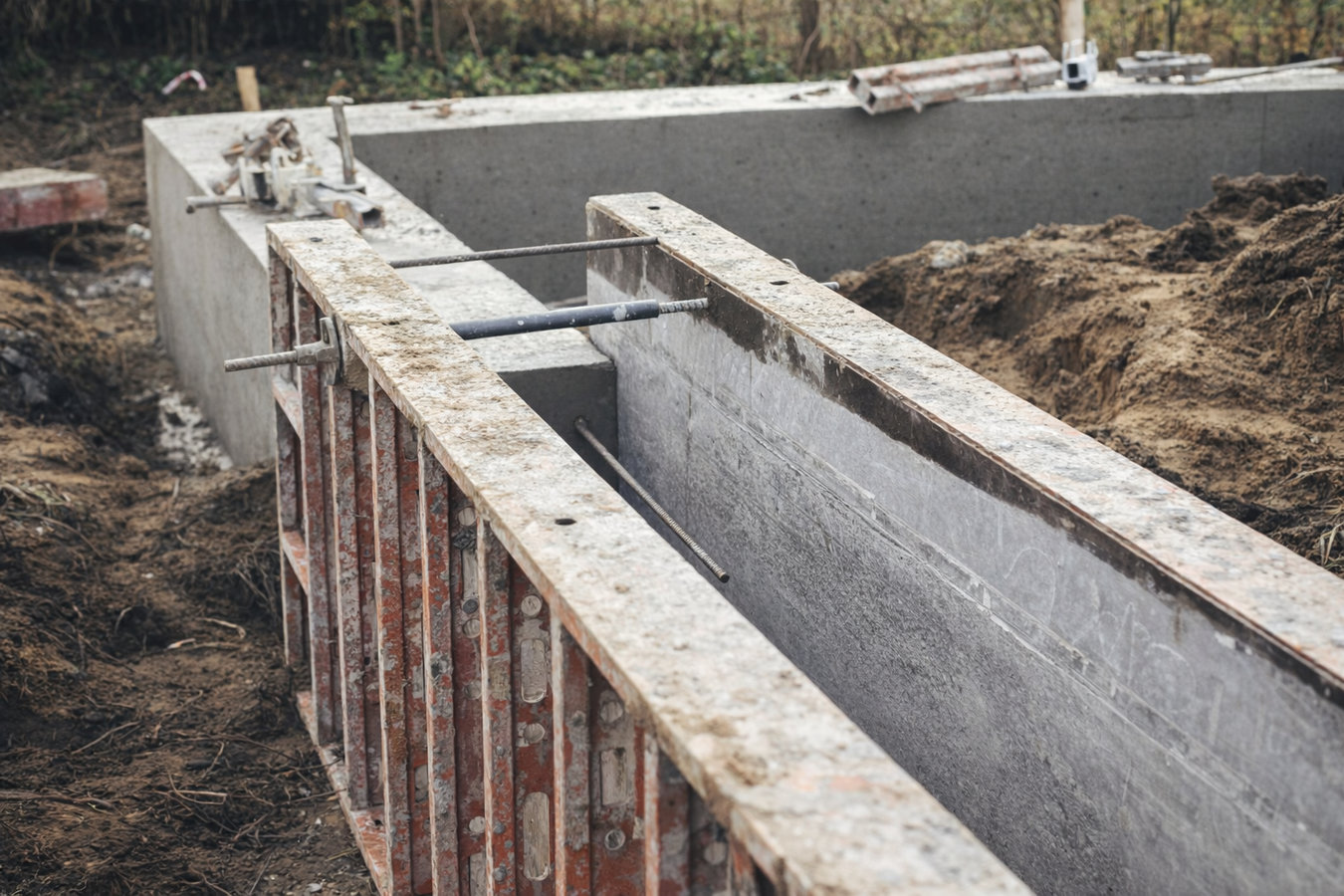
Sunken slabs, tilting porches, and uneven garage floors - we lift settled concrete back to level with minimal disruption and a written estimate before we start.
Foundation raising in Bridgewater lifts a sunken or uneven concrete slab back to its original level position by pumping a lifting material underneath it, most jobs complete in a single day and the surface is walkable again the same afternoon.
If you have noticed your garage floor dipping toward one corner, a porch that has pulled away from the house, or doors that stick after a long winter, settling soil is usually the culprit. Bridgewater sits on glacially deposited sandy soils that shift more easily than dense clay, and decades of freeze-thaw cycles make this a common problem here. Raising the slab costs far less than tearing it out and replacing it, and when the drainage issue underneath is corrected at the same time, the repair holds for years.
If a full replacement turns out to be the better call, we can handle that too - take a look at our concrete cutting service for section removal, or our slab foundation building page if you need a new pour from scratch.
If interior doors that used to swing freely now drag on the floor or fail to latch, your home's frame may be reacting to movement below. In Bridgewater this often shows up in spring after the ground thaws. It does not mean the home is in danger, but it is worth having a contractor take a look before the problem gets worse.
Stand in the middle of your garage or on your front porch and look toward the edges - if the floor tilts noticeably toward one corner or you can feel the slope underfoot, the slab has settled unevenly. In Bridgewater's sandy soil this kind of settling can accelerate quickly. A small dip today can become a tripping hazard or drainage problem if left alone.
If puddles form against your home after rain rather than draining away, that water is likely working its way under your slab and eroding the soil beneath it. Bridgewater gets heavy spring and fall rain, and homes with flat or inward-sloping grading are especially vulnerable. Pooling water is both a sign of a current problem and a cause of future settling.
Hairline cracks in concrete are normal. Cracks wider than a quarter-inch, diagonal cracks, or cracks that seem to be growing are a signal that the slab is under stress from uneven support. In older Bridgewater homes built on fill soil these cracks often appear first near corners or doorways. If you can fit a pencil into a crack, it is time to call.
We handle both mudjacking and polyurethane foam injection, and the right choice depends on your specific slab, the condition of the soil beneath it, and how quickly you need the area back in use. Traditional mudjacking pumps a cement-and-soil slurry under the concrete to fill voids and push the slab up - it is proven, cost-effective, and well-suited to larger outdoor slabs like driveways and garage floors. For homeowners who need a faster cure time or whose soil is already soft and sandy, foam injection uses a lightweight expanding material that hardens in minutes, leaves smaller holes, and puts less additional weight on the ground below.
In cases where a slab has settled too far or is cracked beyond what lifting can fix, we are honest about that - and we can connect you to our concrete cutting service to remove the damaged section cleanly before a new pour. If the project requires a new slab from the ground up, our slab foundation building crew can handle that as well.
Best suited for larger outdoor slabs where cost efficiency matters and a 24-hour cure window is acceptable.
Ideal for homeowners who need faster curing, smaller access holes, or work done in tighter indoor spaces.
For slabs where the cause of settling is unclear, we inspect drainage and soil conditions before recommending a method.
After the lift, we talk through what caused the settling and what simple changes - grading, gutters, downspouts - can help it last.
Bridgewater sits in Plymouth County where winters regularly bring repeated freeze-thaw cycles from November through March. Every time the ground freezes and then thaws, the soil beneath your foundation shifts a little - and over years those small shifts add up to noticeable settling. The glacially deposited sandy and gravelly soils common throughout this part of southeastern Massachusetts drain quickly but also compress and wash away under a slab more easily than dense clay soils do. Homes built on fill soil - common throughout many Bridgewater neighborhoods - are especially prone to this pattern. Foundation problems here tend to get worse faster than in warmer climates, which is why waiting a season before addressing them is rarely a good idea.
We serve homeowners throughout Bridgewater and the surrounding area, including Raynham, MA and East Bridgewater, MA. If your home is from the 1960s, 70s, or 80s - a large share of the housing stock in this area - it has had decades for the soil underneath to compact and shift, and a foundation check is worth scheduling even if you have not noticed obvious symptoms yet.
Call or fill out the form and we will get back to you within one business day. We will ask a few basic questions about where the settling is happening and what you have noticed - no technical knowledge required on your end.
We come to your property and walk the affected area - checking the slope of the slab, looking for cracks, and assessing drainage around the foundation. By the end of the visit we can tell you whether raising is the right fix or whether something else is going on.
In Massachusetts, any home improvement contract over $1,000 must be in writing - and we give you a detailed written estimate regardless of project size. You will know exactly what is being done and what it costs before we pick up a single tool.
The crew drills small holes, pumps the lifting material underneath, and monitors the slab as it rises. Most residential jobs finish in a few hours. Foam-lifted surfaces are walkable almost immediately - driveable slabs get a 24-hour window if traditional slurry was used.
Written estimate before work starts. No obligation. We respond within one business day.
(774) 380-3018The sandy, glacially deposited soil under many homes in this part of southeastern Massachusetts behaves differently than soil elsewhere in the state - it shifts, drains fast, and can wash away under a slab after heavy rain. We have seen this pattern many times in this area and know how to address the cause, not just the symptom.
One of the biggest worries homeowners have when hiring a contractor is a low quote that balloons once work starts. We give you a written estimate that spells out every cost before we begin. Massachusetts law requires written contracts for residential jobs over $1,000 - we follow that standard on every project regardless of size.
A raised foundation that settles again within a year or two is a sign the contractor did not address what was causing the problem in the first place. We inspect drainage and soil condition before lifting anything, and we tell you honestly if there is something that needs to be corrected alongside the raising. For regulatory standards, see the{" "} work of the{" "} International Concrete Repair Institute
After a Bridgewater winter, contractor schedules fill up quickly in April and May. Calling in late winter or early spring gives you the best chance of locking in your preferred date before the busiest season. We serve Bridgewater and surrounding towns in Plymouth County and keep our schedule realistic so jobs do not pile up.
Every credential and every process we follow is built around one outcome - a repair that holds in Bridgewater conditions, not just a lift that looks good on the day. When the soil is understood and the drainage is corrected, foundation raising is a long-term fix, not a temporary patch.
For more on contractor licensing requirements in Massachusetts, see the Massachusetts Office of Consumer Affairs and Business Regulation. For soil and site information, the USDA Web Soil Survey provides Plymouth County data.
Precise cuts for renovations, plumbing access, and concrete section removal.
Learn MoreStructural concrete slabs poured level from the ground up for additions and new builds.
Learn MoreSpring schedules in Plymouth County fill fast - reach out now and we will have you a written estimate before anyone else picks up a phone.