Serving Bridgewater, MA and surrounding areas. (774) 380-3018
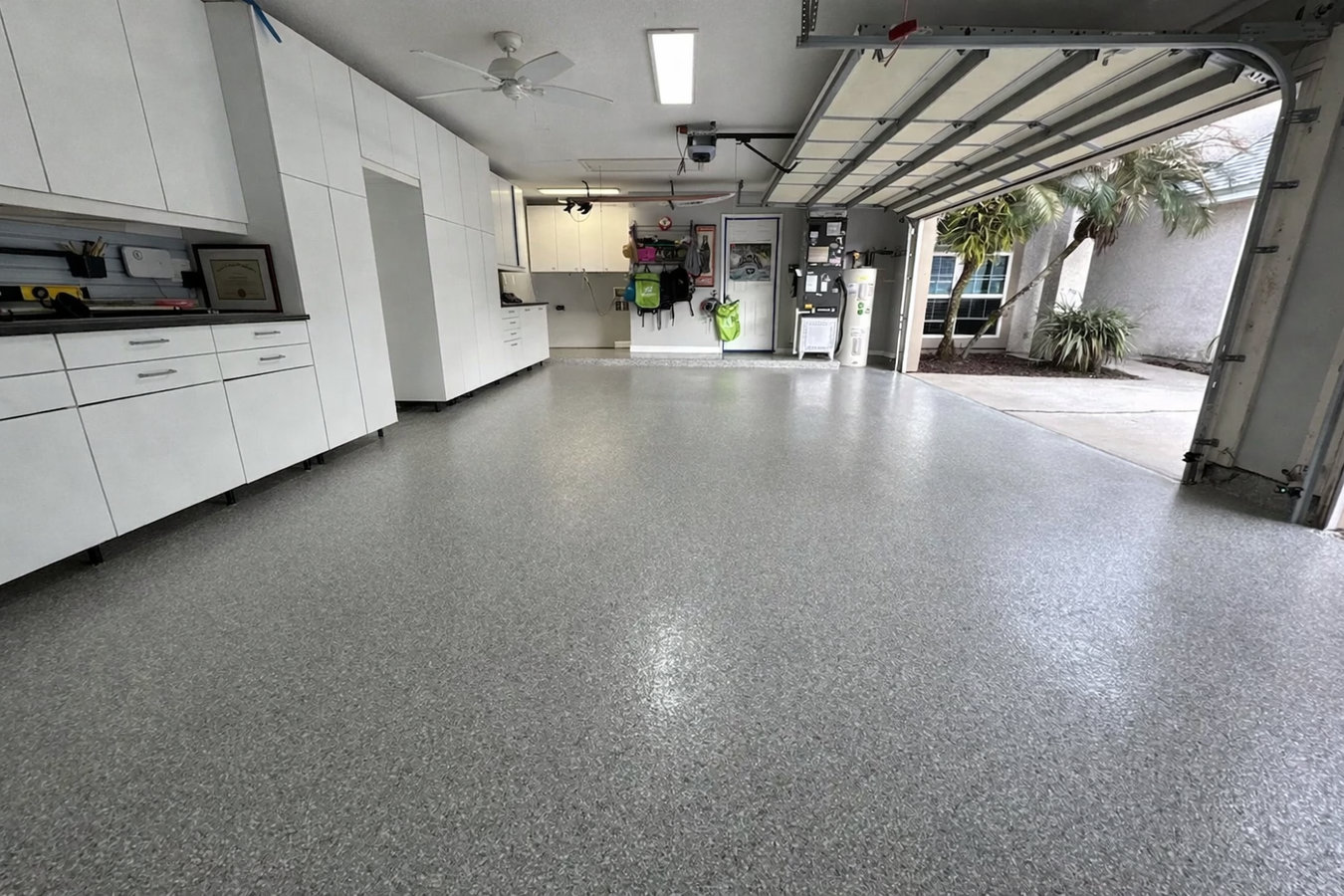
Your garage floor takes a beating every winter. We pour and replace concrete garage floors in Bridgewater built for freeze-thaw cycles, road salt, and decades of daily use.
Garage floor concrete in Bridgewater involves breaking out the old slab, grading and compacting the base, then pouring fresh concrete to current thickness standards - most two-car garages are completed in one to two days of active work.
A lot of Bridgewater homes were built between the 1950s and 1980s, which means a large share of garage floors in town are 40 to 60 years old. If your floor has cracks that keep growing back after patching, or sections that sound hollow when you tap them, the problem is not the surface - it is what is underneath. A proper replacement fixes the base and gives you a floor built to last another few decades.
If you are also thinking about the look of your garage, our decorative concrete and concrete floor installation services cover coatings and finishes that upgrade your garage at the same time.
Small hairline cracks are normal and usually harmless. But if you have noticed cracks that seem wider than last year, or that have started branching out in new directions, the slab is moving or settling underneath. In Bridgewater, this often happens after a hard winter when repeated freezing and thawing has worked on existing weak spots.
If the top layer is starting to chip off in thin flakes - especially near where you park - that is road salt and moisture damage from Bridgewater winters. Cars track salt from Route 18 and Route 28 into garages every day from November through March. Once the surface starts flaking, it tends to accelerate fast.
Puddles forming in the same spots after rain or snowmelt mean the floor has developed low spots from uneven settling. Standing water in a garage speeds up concrete deterioration, can seep under the slab, and creates a slip hazard throughout the winter months.
Walk your garage floor and knock on it with your knuckle or a screwdriver handle. If some sections sound hollow rather than solid, the concrete has separated from the ground beneath it. Those sections are likely to crack or collapse under vehicle weight, and patching them rarely holds for long.
We handle the full scope - from demo and debris removal through base grading, pour, and finish. Every job starts with a proper assessment of what is underneath the existing slab, because the condition of the base determines how long your new floor holds up. We use air-entrained concrete mixes designed for Massachusetts freeze-thaw conditions, which means the floor has room to expand and contract without cracking through a Bridgewater winter. If you want to take the project further, our decorative concrete service covers stamped, colored, and epoxy-coated finishes that work over a fresh slab.
Once your garage floor is done, a lot of homeowners also ask about connecting surfaces - walkways from the garage door to the house, for example. Our concrete floor installation service extends to indoor slabs and utility spaces if you have other areas that need attention at the same time.
Best for homeowners with an aging or badly damaged floor who want a clean start with proper base work.
Ideal for garages that were never finished with concrete - we prep the ground and pour a full slab to current standards.
For homeowners who want the new floor protected against road salt and moisture from day one, not just from the pour itself.
For homeowners who want a hard, easy-to-clean surface that also resists staining and salt damage over the long haul.
Bridgewater sits in Plymouth County, where winters bring temperatures that swing above and below freezing dozens of times between November and March. Every time water gets into a small crack in your garage floor and freezes, it expands and makes that crack bigger. A floor that was not poured with the right mix for cold-weather durability will deteriorate noticeably faster here than it would in a milder climate. On top of that, the sandy glacial soils common in this part of southeastern Massachusetts can shift and settle unevenly under a slab if the base is not properly compacted - which is why we inspect and prepare the ground before any concrete is placed. Homeowners in Raynham and East Bridgewater deal with the same conditions and the same pattern of premature slab failure when base prep is skipped.
Massachusetts also heavily salts its roads through the winter months, and that salt gets tracked into garages on tires and boots every day from November through March. Salt is one of the most damaging things that can happen to a concrete floor - it draws moisture into the surface and accelerates cracking and flaking. This is a strong argument for sealing your garage floor and resealing it every few years, and it is something we discuss on every job. A garage floor in Bridgewater that is sealed and properly poured can hold up for 30 to 50 years. One that is not may need attention again within a decade.
For more on cold-weather concrete practices, see the Portland Cement Association and Massachusetts State Building Code (780 CMR).
We respond within one business day. We will ask the size of your garage, whether there is an existing slab, and whether you have noticed specific problems. No obligation, no pressure - just a straight conversation about your project.
We come to your property, measure the space, check the existing slab, and assess the base. The final price depends on thickness, site prep, and finish choices - we walk through all of that before you make any decision.
Demo is loud and generates debris - plan for a truck in your driveway. Once the old slab is out, we grade and compact the base before anything is poured. The concrete pour typically takes a few hours for a standard two-car garage.
You can walk on the floor within 24 to 48 hours and park on it after about a week. Once cured, we apply sealer if included, then do a final walkthrough and leave you with clear instructions on care and resealing.
We respond within one business day and come to your property before quoting. No obligation - just a straight answer on what it will take.
(774) 380-3018We walk you through the base preparation before any concrete goes down. You can see exactly what is underneath and make sure the foundation is solid - because that is what determines how the floor holds up five and ten years from now.
We use air-entrained concrete on every garage floor pour, which the American Concrete Institute recommends for freeze-thaw environments. Tiny air pockets in the mix give the slab room to expand and contract without cracking through a Massachusetts winter.
Massachusetts requires Home Improvement Contractor registration for this type of work. We are registered, and we check permit requirements with the Bridgewater Building Department before every project - so there is nothing to worry about when it comes time to sell your home.
We give you a straightforward schedule before work starts - when the crew arrives, how long each phase takes, when you can walk on it, and when you can park on it. You are not left guessing about your own garage.
Bridgewater homeowners deal with conditions - road salt, freeze-thaw cycles, aging housing stock - that make garage floor work more demanding than it looks on paper. Every choice we make on a job, from the mix design to the base prep, is aimed at a floor that holds up through all of it.
Add color, texture, or an epoxy coating to upgrade your garage floor beyond a standard gray slab.
Learn MoreInterior concrete floors for basements, utility rooms, and other indoor spaces alongside your garage project.
Learn MoreSpring and summer slots fill fast in Bridgewater - reach out now and we will come take a look before the season books out.