Serving Bridgewater, MA and surrounding areas. (774) 380-3018
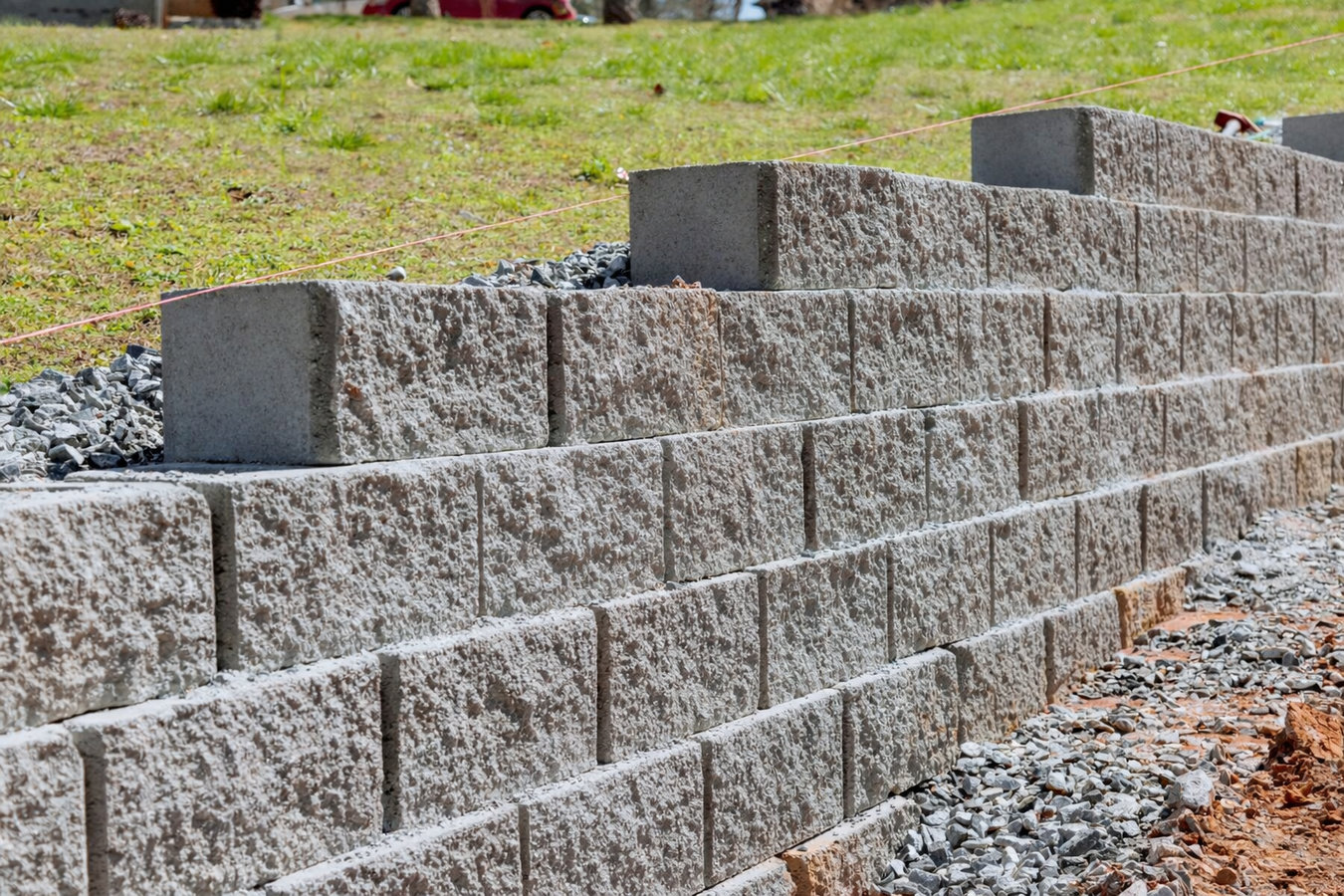
If your slope is washing away or your existing wall is starting to lean, we build retaining walls that hold back soil, stop erosion, and give you usable yard back.
Concrete retaining walls in Bridgewater hold back soil on a slope so it does not slide, wash away, or creep into your yard, driveway, or foundation - most residential projects run two to four days from excavation to backfill.
If you have a slope that loses soil after every rainstorm, or a wall that is starting to lean, you already know the problem is real. Concrete retaining walls in Bridgewater are a permanent fix - not a patch job. Many homeowners pair a new retaining wall with concrete floor installation when they are also finishing a basement or low-lying space that benefits from the same drainage work.
The single most important part of any retaining wall is the drainage system built behind it. Without that, water pressure builds up in the soil and eventually pushes the wall over. We build drainage in from the start - every time.
If soil, mulch, or gravel migrates down a slope and collects at the bottom after a rainstorm, your yard is actively eroding. In Bridgewater, spring rains and snowmelt can accelerate this quickly. Left alone, erosion can undermine landscaping, damage a driveway edge, or eventually threaten a foundation.
A retaining wall that is starting to tilt forward or shows horizontal cracks across its face is telling you the soil pressure behind it is winning. This is especially common in Bridgewater homes from the 1970s and 1980s, where original walls are now aging past their design life. A leaning wall will eventually fall - the longer you wait, the more damage it can cause.
If water consistently collects at the bottom of a sloped area after rain, the ground is not draining properly - and that water is sitting against whatever is holding the slope back. Over time, this saturates the soil and dramatically increases pressure on any wall in place. A properly built retaining wall with drainage redirects that water before it becomes a problem.
Sometimes the first sign of shifting soil is a crack appearing in a nearby driveway, walkway, or patio. If you see cracking in hardscape that sits at the base of or adjacent to a slope, it may mean the ground underneath is moving. A retaining wall can stabilize the soil and stop that movement before it causes more expensive damage.
We build two main types of concrete retaining walls: poured-in-place walls formed on-site as a single solid structure, and segmental block walls built from interlocking units that stack well on uneven terrain. Both hold up to Bridgewater soil conditions and freeze-thaw stress when built with proper drainage. We also handle concrete steps construction when a wall project includes a new staircase down a tiered slope.
Every retaining wall project includes excavation, base preparation, drainage aggregate and pipe behind the wall, and backfill compacted in layers. Permit applications for walls over 4 feet - required by the Town of Bridgewater - are handled by us so you do not have to navigate the building department yourself. We also pour concrete floors for homeowners who are improving a basement or lower-level area at the same time.
Best for homeowners who need a single solid structure to handle heavy soil loads or taller slopes.
Well-suited to properties with uneven terrain or where access for forms and concrete trucks is limited.
For homeowners who need to redirect surface and subsurface water away from a slope or foundation before or after wall construction.
For Bridgewater homes from the 1970s and 1980s where the original retaining wall has reached the end of its useful life.
Bridgewater sits on glacially deposited soils - which means the ground can vary from sandy and well-draining in one yard to dense, clay-heavy soil just a few streets over. Clay soil holds water and puts significantly more pressure on a retaining wall than sandy soil does. Combined with the freeze-thaw cycles Plymouth County goes through every winter, a wall that skips the drainage layer is going to fail. We see that failure pattern regularly in Raynham and in East Bridgewater, where homes built in the 1970s and 1980s have walls that are now aging past their design life.
Spring is when most wall failures happen in this area. Snowmelt and April rains saturate the soil, peak water pressure builds up behind the wall, and walls that were holding on for years finally give. If you are planning a new wall or repairing an existing one, scheduling in fall or early winter gives you more contractor options and often better pricing - and it means your wall will be in place before the next wet spring arrives.
Describe what you are dealing with - a slope, a failing wall, a drainage problem - and we will get back to you within one business day to schedule a time to come out. Most homeowners get a call back the same day.
We look at the slope, check the soil, measure what is needed, and figure out whether a permit is required. You get a written estimate that explains the scope and cost so there are no surprises.
For walls over 4 feet, we handle the Bridgewater building permit application. Once approved, we excavate, remove any old material, compact the base, and run the drainage trench behind where the wall will sit.
The wall is built, drainage gravel and pipe are placed behind it, and the soil is backfilled in compacted layers. We clean the site before we leave. For poured walls, we walk you through the curing period so you know what to expect.
Free on-site estimate. We handle the Bridgewater building permit if one is required. No obligation.
(774) 380-3018We do not build a wall and then figure out drainage later. Every project includes crushed stone backfill and a drainage pipe behind the wall - because that is the difference between a wall that lasts 50 years and one that fails in a few. In Bridgewater's clay soils, skipping this step is not an option.
Walls over 4 feet in Bridgewater require a building permit, and navigating that process is one of the things homeowners dread most. We manage the permit application, keep you updated, and make sure work does not start until everything is approved - so there are no stop-work orders or complications at resale.
Many homes in Bridgewater from the 1970s and 1980s have retaining walls that are now past their design life. We will tell you honestly what we find - whether repair makes sense or whether a replacement is the better long-term value. You get facts, not a sales pitch.
We hold the required Massachusetts Home Improvement Contractor registration for residential work. You can verify contractor registrations through the Massachusetts HIC program before you hire anyone.
We work on properties throughout Bridgewater and the surrounding towns. Every project gets the same drainage detail and base preparation - because that is what the soil and climate here demand.
For permit requirements, see the Town of Bridgewater Building Department. For concrete construction standards, the American Concrete Institute is the industry authority.
A new basement or lower-level slab, poured with the same drainage care we bring to every retaining wall project.
Learn MoreNew or replacement concrete steps that connect a tiered retaining wall to the rest of your yard or entrance.
Learn MoreSpring books fast in southeastern Massachusetts - call now or send us a message to lock in your project date before the rush.