Serving Bridgewater, MA and surrounding areas. (774) 380-3018
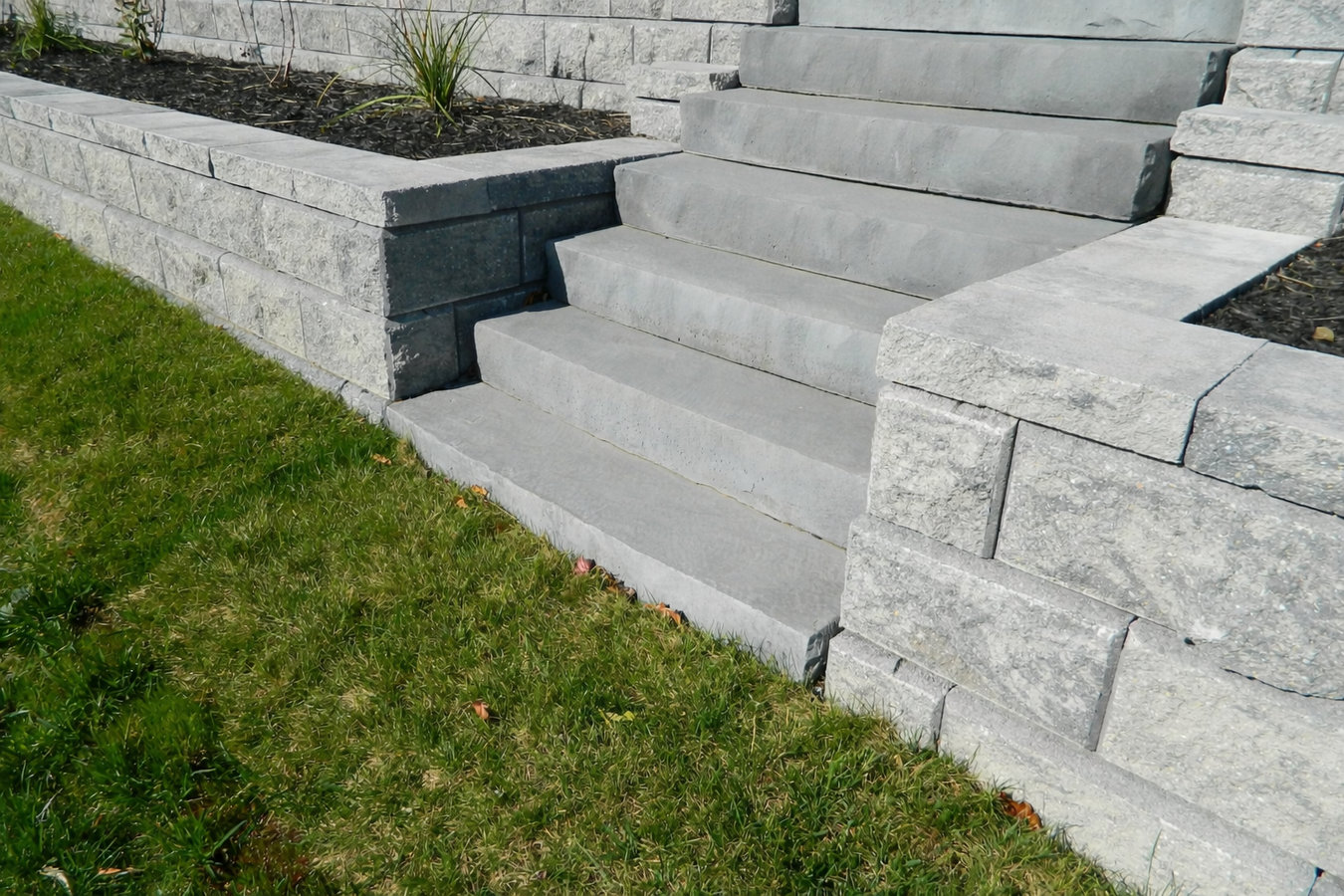
Crumbling, tilting, or uneven entry steps are a safety problem. We build and replace concrete steps that hold up through hard winters and stay level for decades.
Concrete steps construction in Bridgewater involves demolishing old steps if needed, compacting a gravel base, building wood forms, pouring the concrete, finishing the surface, and letting it cure - a standard front entry set takes one to two active work days plus 24 to 48 hours of curing before the entrance is usable again.
A lot of homes in Bridgewater were built in the 1950s through the 1980s, and steps from that era are now reaching the end of their safe lifespan. If yours are crumbling at the edges, tilting, or have cracks that go all the way through - that is not a cosmetic issue, it is a safety one. Guests and elderly family members are at real risk on steps that shift underfoot, especially in winter. If you are replacing steps as part of a larger project, many homeowners also add concrete retaining walls at the same time to address grading and erosion around the entry.
Spring is the busiest season for concrete work in this area. Homeowners who noticed damage over winter all call at once, and contractors fill up fast. Reaching out in late winter gives you the best shot at your preferred schedule.
If the corners or edges of your steps are breaking off in chunks, or the surface is peeling away in thin layers, that is concrete spalling caused by years of freeze-thaw exposure. This kind of deterioration does not repair well with patching compounds - once it starts in a New England climate, it tends to spread.
If you can see a visible gap between your steps and your foundation, or the steps tilt to one side, the base underneath has moved. In Bridgewater's mix of sandy and clay soils near the Taunton River watershed, this can happen when water repeatedly saturates and dries out the ground. Tilted steps are a trip hazard that should not wait.
If you find yourself instinctively hesitating on a particular step, the risers may have become uneven as the structure has settled. You adapt to it over time - but guests and older visitors are at real risk of tripping. Run your hand along the front face of each step and check whether the heights feel consistent.
Small surface cracks are common and not always urgent. But a crack that goes all the way through the depth of a step - especially one that widens each spring - means the structural integrity is compromised. Water enters, freezes each winter, and the crack grows. In Bridgewater, a through-crack rarely stays stable for long.
We handle everything from demolishing your old steps and hauling them away, to grading the base, pouring, and finishing the new ones. The most common choice for Bridgewater homeowners is a broom finish - slightly textured for traction in wet and icy conditions - paired with consistent, even riser heights so the steps feel natural underfoot. If you want something with more visual appeal, a stamped concrete finish uses patterned molds pressed into the wet surface to mimic stone or brick.
We also pour exposed aggregate finishes, which give good grip and a clean look without the higher cost of stamping. If your project includes a landing at the top or bottom of the steps, we pour that as part of the same job. And if Massachusetts building code requires a handrail for your number of risers, we can help coordinate that work so it is done at the same time rather than retrofitted later.
Best for homeowners who want safe, practical entry steps with reliable traction through wet and icy conditions.
Ideal for homeowners who want their entry steps to match a stamped patio or add curb appeal beyond plain gray concrete.
A good fit for homeowners who want a textured, attractive surface that sits between plain broom finish and full decorative stamping in cost and look.
Best for homes where the entry needs a flat transitional area at the top or bottom of the staircase, poured as one cohesive structure.
Much of Bridgewater's residential neighborhoods were developed in the mid-20th century, and steps from that era were often poured without the base preparation or concrete mixes we use today. Add Bridgewater's full New England winter - with temperatures cycling above and below freezing dozens of times each season - and you have the conditions that explain why so many older steps in Plymouth County are crumbling or shifting. The soils here, a mix of sandy glacial deposits and clay-heavy ground near the Taunton River watershed, also shift more than soils in other regions, which means base preparation is not optional if you want steps that stay level.
We work on entry steps throughout the area, including regularly in West Bridgewater and Middleborough, where the same soil and climate conditions apply. The Massachusetts state building code also governs handrail requirements for exterior stairs - for most projects in Bridgewater, a building permit is required, and we handle that process entirely so the finished work is inspected and on record.
You can review general requirements through the Massachusetts State Building Code, and the American Concrete Institute publishes guidance on freeze-thaw resistant concrete practice that informs how we approach every step project in this climate.
You call or message us, describe what you have, and we schedule a time to come look. We want to see the site before giving you a number - the ground condition and scope of demolition both affect the price. We reply within one business day.
Once you agree on scope and price, we apply for the building permit with the Town of Bridgewater. This typically takes a few days to a week. We manage the process entirely and let you know when the permit is in hand before we schedule the work.
We break out the old steps and haul them away, excavate the area, compact a gravel base, build the forms, and pour the concrete. This phase typically takes one full day. The entrance will be off-limits for at least 24 to 48 hours after the pour.
The next day we strip the forms, do any final surface touch-up, and clean up the work area completely. We walk you through what to avoid during the curing period. The town inspector signs off on the permitted work, and we coordinate that visit for you.
No obligation. We handle the Bridgewater permit from start to finish.
(774) 380-3018We use air-entrained concrete mixes that resist freeze-thaw damage, which is the primary reason steps fail early in this climate. That is not a marketing claim - it is a specific material choice that costs slightly more and makes a significant difference in how long your steps hold up.
Breaking up and removing old concrete steps is labor-intensive work that some contractors price separately or leave out of low bids. We include it in every quote we give, so you know what you are actually paying for before the job starts.
The Town of Bridgewater requires a building permit for structural step work. We apply for it, manage the timeline, and coordinate the inspector's visit. You do not navigate Town Hall - we do, and the finished work is on record for any future home sale.
Not every damaged step needs a full replacement. We will tell you honestly during the estimate whether a repair makes sense - and we will explain why in plain terms, not contractor jargon. If replacement is the better call, we will explain that too.
We have worked on entry steps across Bridgewater and throughout Plymouth County, and we bring the same approach to every job: honest assessment, proper materials, and work that is inspected and on record when we leave.
If your steps are pulling away from the foundation, the underlying slab may also need attention before the new steps go in.
Learn MorePair new entry steps with a concrete retaining wall to address grading, erosion, or grade changes around your front or side entry.
Learn MoreEvery winter that passes does more damage to failing steps - reach out today and we will get your estimate on the calendar before the spring rush.